
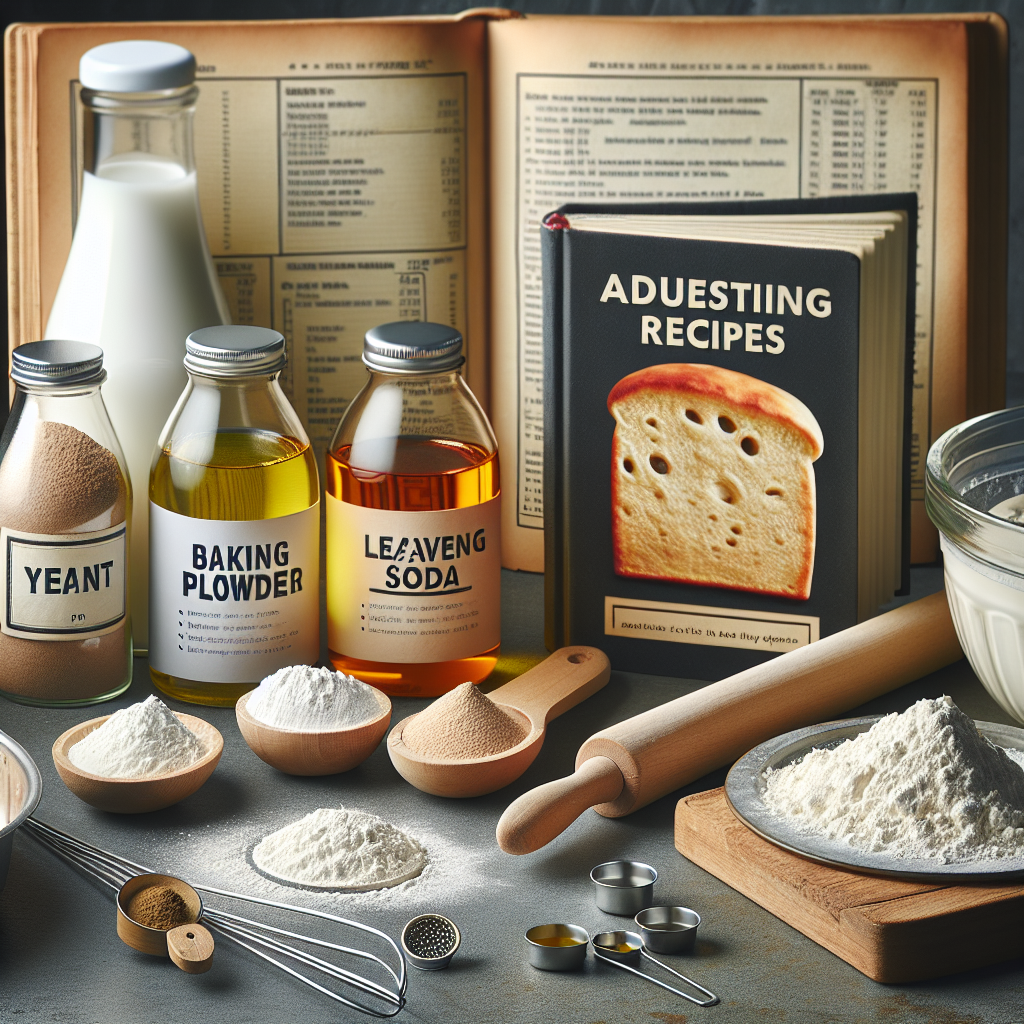
Leavening agents are critical in baking, as they help create the rise and texture we associate with baked goods. Understanding how to adjust recipes for different leavening agents can expand your baking repertoire and improve the quality of your baked products. Here’s a guide to help you navigate this essential aspect of cooking.
Understanding Leavening Agents
Leavening agents come in three main categories:
-
Chemical Leaveners: These include baking powder and baking soda. They produce carbon dioxide gas when they react with moisture and acid or heat.
-
Biological Leaveners: Yeast is the most common biological leavener. It ferments sugars and produces carbon dioxide, causing dough to rise.
- Mechanical Leaveners: Techniques like whipping air into batters or doughs through methods like creaming butter and sugar or folding egg whites.
Tips for Adjusting Recipes
1. Swapping Chemical Leaveners
When substituting baking soda or baking powder, consider the following:
-
Baking Soda: This is typically used when there’s an acidic component in the recipe (like buttermilk or vinegar). If substituting baking powder for baking soda, use three times as much, and ensure there’s enough acid in the recipe to activate it.
- Baking Powder: For recipes needing baking soda, use baking powder instead, but increase the amount. Generally, you’ll need 3 teaspoons of baking powder for every teaspoon of baking soda.
2. Adjusting for Yeast
When swapping yeast for chemical leaveners, keep in mind:
-
Proofing: Yeast needs to be proofed in warm water (110°F–115°F) with sugar before being added to the flour mixture. This step activates the yeast.
-
Rise Time: Yeast requires time for fermentation. Depending on the recipe, you may need to allow for extended proofing times—usually ranging from 1 to 2 hours.
- Sugar Content: Increase sugar slightly if you’re using yeast, as it provides additional food for the yeast and enhances flavor.
3. Incorporating Mechanical Leaveners
For techniques like whipping air into the mixture:
-
Creaming Method: When creaming butter and sugar, use softened butter for optimal incorporation of air. Cream until light and fluffy to ensure enough leavening.
- Egg Whites: When using whipped egg whites for leavening, always ensure the bowl and utensils are grease-free. Fold gently into the batter to avoid deflating the air bubbles.
4. Adjusting Liquid Content
Changing leavening agents often requires adjustments to the liquid content:
-
Baking Powder/Soda: If you increase the amount of baking soda or baking powder, you might need to slightly increase the liquid content. Conversely, if reducing these agents, decreasing liquids may also be necessary to maintain the right batter consistency.
- Completing the Yeast Mixture: Yeast requires additional liquid for proofing, so consider how much liquid you add before baking.
5. Temperature Considerations
The temperature you bake at can affect how well your leavening agents work:
-
Baking Soda and Baking Powder: These are usually effective at standard baking temperatures (350°F–375°F). However, make sure to bake immediately after mixing to get maximum leavening.
- Yeast: Yeast doughs often require higher temperatures and longer baking times, influencing the texture and crust. A general increase in temperature to around 375°F–425°F can enhance crust formation without compromising the rise.
6. Experiment and Monitor
Baking can sometimes be about trial and error:
-
Note Changes: While adjusting recipes, keep a detailed record of changes made. This will help you refine your recipes over time.
- Check Timing and Texture: Monitor the doneness and texture of your baked goods as adjustments may lead to unexpected results.
7. Practice Patience
- Improvement comes with experience. Don’t be discouraged by initial attempts; fine-tuning your approach and learning from each batch is key to mastering various leavening agents.
Conclusion
Adjusting recipes for different leavening agents can seem daunting, but understanding the science behind each agent and making careful adjustments can lead to delicious results. With practice, you’ll gain confidence in modifying recipes to suit your preferences and the ingredients you have on hand. Happy baking!
