
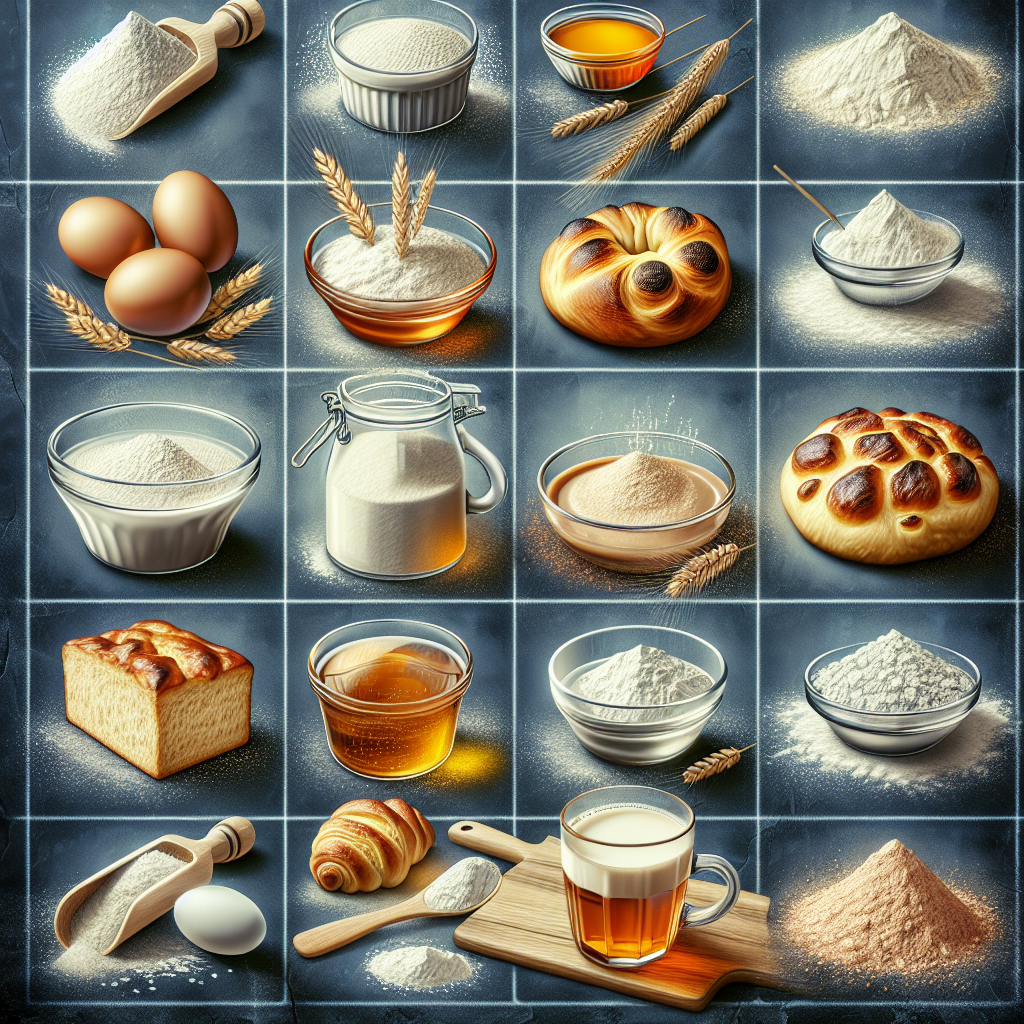
Baking is as much a science as it is an art, and at the heart of this culinary discipline lies the concept of leavening. Leavening agents are the magical ingredients that cause baked goods to rise, imparting a light, airy texture to breads, cakes, and pastries. This article explores the various types of leavening agents, how they function, and their roles in creating the perfect rise in baked products.
What Are Leavening Agents?
Leavening agents are substances that introduce gas bubbles into the batter or dough, leading to expansion during the baking process. These gases often arise from chemical reactions, fermentation, or physical means. The most common leavening agents fall into three categories: chemical, biological, and physical.
1. Chemical Leavening Agents
Chemical leaveners create gas through chemical reactions, typically activated by moisture and heat. The most prevalent chemical leaveners include:
-
Baking Soda (Sodium Bicarbonate): This alkaline compound requires an acid (such as vinegar, yogurt, or buttermilk) to produce carbon dioxide (CO2) gas. When mixed with an acidic ingredient, baking soda reacts instantly, causing a rapid release of gas. This is why recipes calling for baking soda often require quick baking after mixing to take full advantage of the leavening effect.
- Baking Powder: This is a combination of baking soda and an acid (often cream of tartar), along with a moisture-absorbing agent like cornstarch. Baking powder can be single-acting, which reacts when moistened, or double-acting, which reacts both upon moisture and when heated. The dual time frames enable greater control over the leavening process in baked goods.
2. Biological Leavening Agents
Biological leaveners rely on organisms to produce gas. The most common biological leavening agent is yeast, a single-celled fungus that ferments sugars, producing carbon dioxide and alcohol in the process.
- Yeast: When activated in a warm, sugary environment, yeast multiplies and ferments, releasing CO2 that gets trapped in the dough. This not only causes the dough to rise but also adds depth of flavor. Different types of yeast, such as active dry yeast, instant yeast, and fresh yeast, are available and have unique properties that impact leavening and flavor development.
3. Physical Leavening Agents
Physical leavening doesn’t involve chemical reactions or biological processes but instead uses air or steam to create lift.
-
Air: Incorporating air into the batter or dough through techniques like creaming butter and sugar or beating egg whites creates tiny air pockets. When heated, these pockets expand, causing the baked good to rise.
- Steam: The high moisture content in some doughs, like puff pastry and choux pastry, generates steam during baking. As the steam heats up, it rapidly expands, contributing to a significant rise and distinct texture.
The Role of Temperature and Ingredients
Temperature plays a crucial role in the effectiveness of leavening agents. Most chemical leaveners require heat to activate fully, while ingredients such as fat can impact the structure and texture of the final product.
-
Eggs: They not only provide moisture but also perform as a binding agent that helps trap gases, creating a stable structure to hold the rise.
- Flour: The protein content in flour, especially gluten, is essential for maintaining the structure of risen baked goods. While the leavening agents create rise, gluten helps stabilize the gas bubbles, ultimately determining the texture of the finished product.
Achieving the Perfect Rise
To achieve the ideal rise in baked goods, understanding the balance and interaction among different leavening agents is crucial. Here are some tips:
-
Use Fresh Leaveners: Ensure that baking soda, baking powder, and yeast are fresh to guarantee their effectiveness.
-
Temperature Control: Maintain an appropriate baking temperature. Too low may prevent proper rise, while too high may cause the outer layer to set before the inside has a chance to rise.
- Correct Measurements: Precision is vital in baking. Too much or too little of a leavening agent can lead to undesirable results, affecting both texture and flavor.
Conclusion
Leavening agents are indispensable in baking, transforming dense mixtures into light, fluffy creations. Understanding the types of leavening agents, their mechanisms, and their interactions with various ingredients enables bakers to harness their power effectively. Whether you’re making a simple loaf of bread or an elaborate cake, mastering leavening is key to achieving that perfect rise and delightful texture every time.
