November 27, 20260 views
Small Business Saturday for Food Lovers: How to Shop Small With Texas Home Cooks, Food Trucks and Cottage Kitchens
Small Business Saturday is November 28. Here's how to shop small for food in Texas: what home kitchens can sell, why online cottage food orders are hand-delivered, how to spot homemade food at markets and shops, tips for gifting homemade food, and ways to help food creators all season.
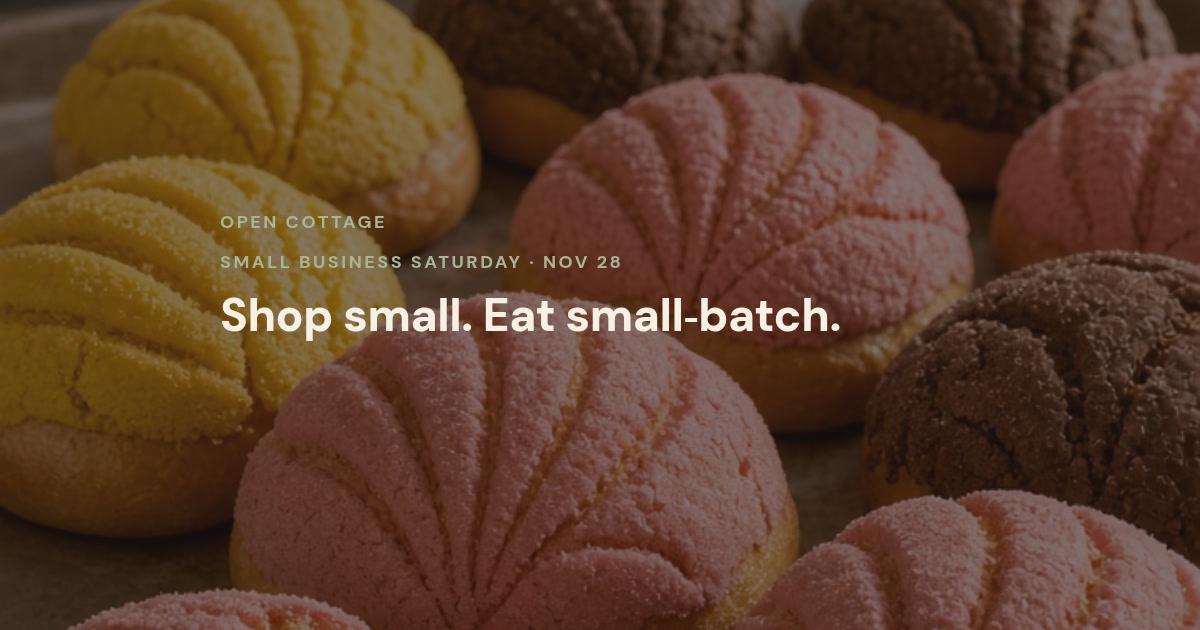
Today is Black Friday, and tomorrow, Saturday, November 28, is Small Business Saturday. The U.S. Small Business Administration describes it as a day to champion small businesses nationwide and #ShopSmall. It was founded by American Express in 2010, and SBA has officially cosponsored it since 2011.
Most Shop Small guides point you to boutiques and bookstores. This one is about food. Some of the smallest businesses in Texas run from a home kitchen or a food truck, and the holiday season is when many of them do their biggest business of the year. Here's how to find them, what to expect when you order, and how to help them long after Saturday.
This is general information, not legal advice. Rules referenced here come from the official sources linked at the end.
Why "shop small" includes your neighbor's kitchen
In Texas, a cottage food production operation is an individual (or, since the 2025 SB 541 update, a nonprofit) making food at home to sell directly to customers. According to Texas DSHS, SB 541 raised the annual gross income threshold for cottage food operations to $150,000. That makes cottage food some of the smallest small business there is: one cook, one kitchen, often one person taking orders, baking, packing and delivering.
Cottage food operations don't need a local health permit, so they don't show up where a restaurant does. You usually find them by word of mouth, a market table or a friend's post. That's what makes them worth seeking out on Small Business Saturday, and why a little help from customers goes a long way.
What you can (and can't) buy from a home kitchen
Since SB 541, DSHS says Texas cottage food can include any foods except:
- Meat, meat products, poultry or poultry products
- Seafood, fish and shellfish products
- Ice and ice products, including ice cream, frozen custard, popsicles and gelato
- Low-acid canned goods
- Products containing CBD or THC
- Raw milk and raw milk products
So a home cook can sell you holiday cookies, pan dulce, fruit kolaches, pies, candy, jams and plenty more. Sausage kolaches (klobasnek), meat tamales and brisket are a different story: buy those from a permitted business like a licensed food truck or restaurant. Our tamale season guide walks through how that plays out for tamales.
Four ways to shop small for food this weekend
1. Order directly from a home cook
Ask around, check your neighborhood groups and look for holiday order forms. Every cottage food label in Texas should show the operation's name, its address or a DSHS registration number, the common name of the food, any major food allergens, and the statement "THIS PRODUCT WAS PRODUCED IN A PRIVATE RESIDENCE THAT IS NOT SUBJECT TO GOVERNMENTAL LICENSING OR INSPECTION." Our Sunday Cravings guide has more on reading labels and ordering ahead.
2. Order online, then plan for the hand-off
DSHS allows cottage food to be sold online when the operator, an employee or a household member personally delivers it to the customer. Before taking your payment, the maker has to post the required label information on their website, and the delivered food carries their address or ID number on the label. In practice, that means you'll set a pickup or delivery window instead of watching for a shipping box. If you're buying for someone in another city, ask whether the maker delivers there or plan to pick up and pass it on yourself.
3. Look for homemade food at markets, farm stands and shops
SB 541 created cottage food vendors: people in Texas who contract with a cottage food operation and sell its food directly to consumers at a farmers' market, farm stand, restaurant or café, or retail store. Vendors who buy at wholesale register with DSHS. You can spot their homemade products by the sign near the display with the same "produced in a private residence" disclosure, and the label will show the date the food was made. Foods that need refrigeration (TCS foods) can't be sold to vendors at wholesale, so expect shelf-stable treats there.
4. Don't skip the food trucks
Food trucks are small businesses too, and they're where you'll find the meat dishes home kitchens can't sell. Since July 1, 2026, Texas mobile food vendors are licensed by DSHS statewide. Our food truck license guide explains what changed.
Giving homemade food as a gift
Homemade food makes a great holiday gift, with a few extra steps:
- Ask about allergens before you buy for someone else. The label lists major allergens like milk, eggs, wheat, tree nuts, peanuts, soy and sesame, but check with the person you're gifting.
- Shelf-stable travels best. Cookies, candy, brittle and many breads hold up in a gift bag. Foods that need the fridge, like cream pies or cheesecakes, come labeled with the date made and a safe-handling statement telling you to keep them refrigerated or frozen.
- Keep fridge foods cold. USDA's Food Safety and Inspection Service says perishable food shouldn't sit out more than 2 hours, or 1 hour above 90°F. If a gift needs the fridge, pack a cooler for the drive.
- Pass the label along. It tells the recipient who made it and how to order more.
How to help small food creators beyond Saturday
Spending money matters most, but it isn't the only way to help a one-person food business:
- Ask for their Christmas cutoff now. Many home cooks cap orders because there's only one oven. Getting on the list early helps them plan.
- Post a photo and tag them. Word of mouth is how most home kitchens get found.
- Leave a review or a kind message. It helps the next customer trust them.
- Pay the listed price. Holiday pricing reflects ingredients, packaging and hours of work.
- Order again in January. The weeks after the holidays are quiet for a lot of small food businesses, and a repeat order helps.
Shopping small for food should be easier
Right now, finding the best home cook or food truck in your city takes a lot of asking around. Open Cottage is building a food-only place where you can find homemade food from local food creators. At launch, food creators get one free page for their menu, photos and how to order. Home cooks, food trucks and licensed cottage kitchens are all welcome. 300+ people have already joined the waitlist, and 250+ of them are food creators.
Join free as a food lover at opencottage.com. Food creators can reserve their name free at the same link.
Sources
- U.S. Small Business Administration, Small Business Saturday (Saturday, November 28, 2026; founded by American Express in 2010; SBA cosponsor since 2011), checked Nov 27, 2026
- Texas DSHS, Texas Cottage Food Production (SB 541 definition and $150,000 gross income threshold, allowable and excluded foods, online sales and personal delivery, label contents, cottage food vendors and sign disclosure, date-made labels, no TCS wholesale, TCS safe-handling statement), checked Nov 27, 2026
- Texas DSHS, Mobile Food Vendors (statewide DSHS licensing beginning July 1, 2026), checked Nov 26, 2026
- USDA Food Safety and Inspection Service, Leftovers and Food Safety (2-hour and 1-hour rules for perishable food), checked Nov 26, 2026