November 19, 20260 views
Selling Pumpkin Pie and Other Fridge Foods From a Texas Cottage Kitchen: TCS Rules Explained
Under SB 541, Texas cottage kitchens can sell many foods that need refrigeration, like pumpkin pie and cheesecake. Here's how registration, temperatures and the extra label lines work.
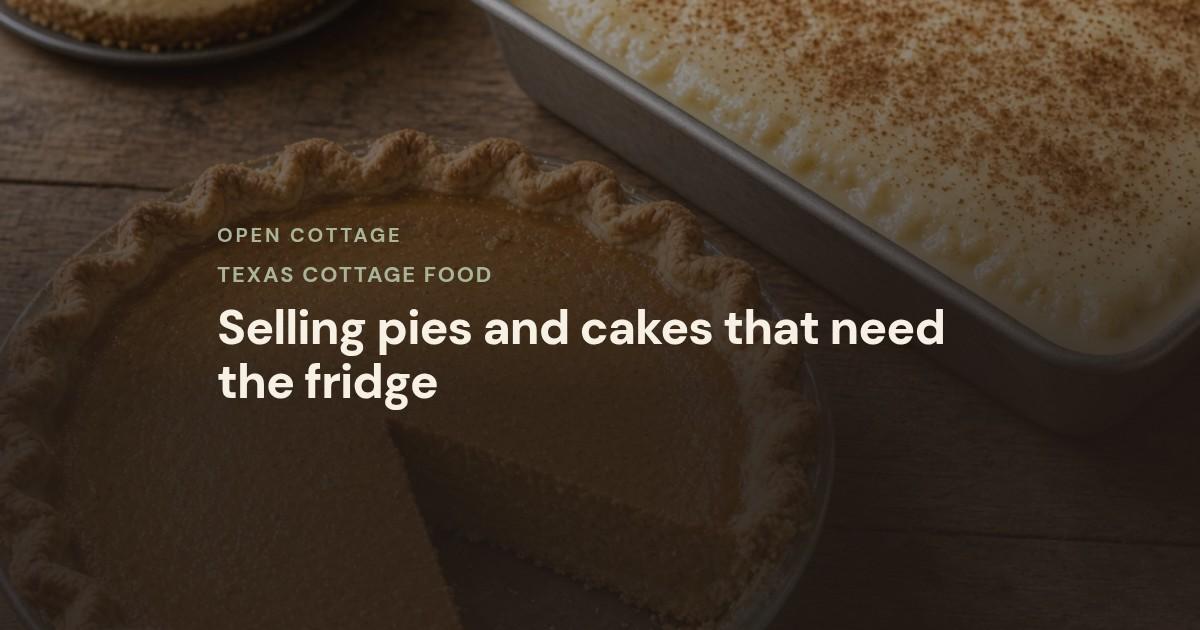
Pumpkin pie, cheesecake, tres leches, cream-filled pastries: a lot of holiday favorites need the fridge. Under the Texas cottage food law changes from SB 541, a Texas cottage food production operation can now sell many of these time and temperature control for safety (TCS) foods from a home kitchen, as long as it follows a few extra rules. This guide walks through what counts as a TCS food, what's still off-limits, and the registration, temperature and labeling steps that come with selling one.
This is general information, not legal advice. Rules can change, so check the official Texas Department of State Health Services (DSHS) pages linked below before you sell.
What is a TCS food?
Texas DSHS describes a TCS food as one that "requires time and temperature control for safety (TCS) to limit pathogen growth or toxin production." In plain terms, it's food that can make people sick if it sits out too long at room temperature, so it has to be kept cold (or hot) (Texas DSHS cottage food page).
Common examples in a home kitchen include custard-style pies such as pumpkin, cheesecakes, cream-filled or cream-topped desserts and milk-soaked cakes like tres leches. If you're not sure whether a recipe needs temperature control, treat it as TCS or ask DSHS before you sell it.
What cottage kitchens still can't sell
SB 541 widened the list of allowed foods to "any foods" except a short list of exclusions. According to DSHS, a Texas cottage food operation still can't sell:
- Meat, meat products, poultry or poultry products
- Seafood, fish, fish products, shellfish and shellfish products
- Ice or ice products, including shaved ice, ice cream, frozen custard, popsicles and gelato
- Low-acid canned goods
- Products containing CBD or THC
- Raw milk and raw milk products
So a pumpkin pie can be on the table, but a smoked turkey can't. Hot sides with meat and holiday proteins belong to permitted food businesses like food trucks and licensed kitchens.
Step 1: Register with DSHS
DSHS says cottage food production operations that sell TCS foods must register on the DSHS Online Licensing Registry. DSHS also publishes a Cottage Food Registration Guidance Document that walks through the process.
There's a side benefit: registered operators can put the unique identification number DSHS provides on their labels instead of their home address.
Step 2: Plan your cold chain (or hot holding)
DSHS says TCS foods must be stored and delivered at an air temperature that keeps the food's internal temperature at 41°F or below for cold items and 135°F or above for hot items.
For a holiday pre-order rush, that usually means thinking about:
- Fridge space. Count how many pies or cakes you can actually keep cold at once before you set your order cap.
- Transport. Coolers with ice packs, or an insulated bag for short trips, so food stays cold on the way to the customer.
- Handoff timing. Short, scheduled pickup or delivery windows mean less time sitting in a car. Our guide to Thanksgiving pre-orders from your home kitchen covers setting caps and handoff windows.
- A thermometer. An inexpensive appliance thermometer helps you confirm your fridge and coolers are holding at 41°F or below.
DSHS also links a printable Cottage Food Production Operations Safe Temperatures sheet (English and Spanish).
Step 3: Add two extra lines to your label
Every Texas cottage food label needs the basics: legible writing, your operation's name, your address or registration number, the product's common name, any major food allergens (such as eggs, tree nuts, soy, peanuts, milk, wheat and sesame) and the required home-kitchen disclosure. Our Texas cottage food label checklist covers those in detail.
For TCS foods, DSHS adds two more requirements:
- The date the food was made, on the food label.
- A safe handling statement in at least 12-point font, on the food label or on an invoice or receipt provided with the food:
"SAFE HANDLING INSTRUCTIONS: To prevent illness from bacteria, keep this food refrigerated or frozen until the food is prepared for consumption."
Tip: put both lines into your label template now, so you don't have to remember them during a busy order week.
Step 4: Know where TCS foods can't go
Some options that work for shelf-stable cottage foods don't work for TCS foods. According to DSHS:
- No donations. Cottage food operations may donate cottage foods, unless the foods are TCS.
- No wholesale. Cottage kitchens can wholesale cottage foods to registered cottage food vendors, but TCS foods aren't eligible.
Samples are a different story: DSHS says cottage food operations may provide samples at any location. If you sample a TCS item, keep it at safe temperatures the whole time. For more on where cottage food can be sold, see where you can sell cottage food in Texas.
Selling online? The same delivery rules apply
DSHS says cottage food sold online has to be personally delivered by the operator, an employee or a household member, and the required label information has to be posted where the buyer can see it before paying. For TCS foods, that personal delivery is also where your cold chain matters most.
A quick TCS checklist
- Registered on the DSHS Online Licensing Registry
- Fridge space and coolers that hold 41°F or below
- Label includes the date made
- Safe handling statement (12-point font or larger) on the label or receipt
- Standard label items: name, address or registration number, product name, allergens, disclosure
- No TCS donations or wholesale
- Food handler training completed (required for every cottage food operator; see our Texas food handler card guide)
Give your holiday menu one home
Once your pies are labeled and your coolers are ready, customers still need one place to see what you're selling and how to order. At launch, Open Cottage will give food creators one free page for your menu, photos and how to order. Home cooks, food trucks and licensed cottage kitchens are all welcome. Reserve your name free at opencottage.com.
Sources
- Texas DSHS, Texas Cottage Food Production (SB 541 changes, allowed foods, TCS registration, temperatures, labeling, donations and wholesale), checked Nov 19, 2026
- Texas DSHS, Online Licensing Registry
- Texas DSHS, Cottage Food Registration Guidance Document
- Texas Legislature, Health and Safety Code Chapter 437