
November 26, 20260 views
Texas Tamale Season: Which Tamales You Can Sell From Home, and How to Order, Store and Reheat Them
Turkey today, tamales tomorrow. Here's what Texas cottage food law says about selling tamales from a home kitchen (the filling decides), the extra rules for fridge foods, a tamale-season plan for food creators, and how food lovers can order, store and reheat their dozen.
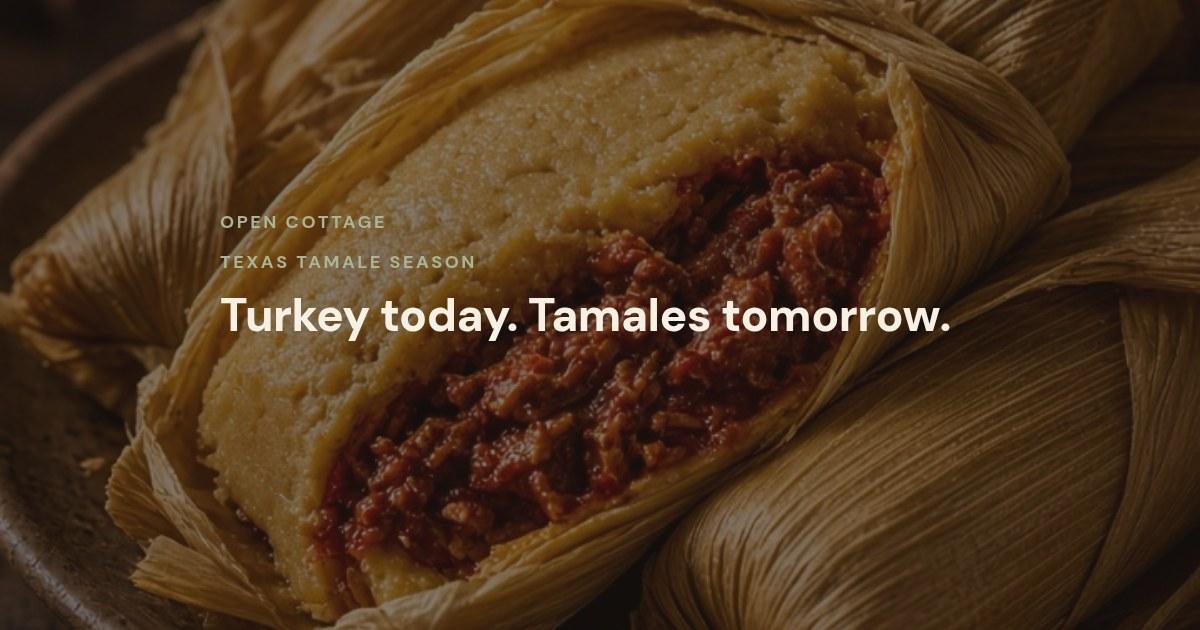
The turkey's barely carved, and in a lot of Texas kitchens the next big project is already on the calendar: tamales. For many families, December means a tamalada, the all-day tamale-making party where everyone spreads masa, folds husks and argues about whose grandmother's recipe is best. For food creators, it means the busiest ordering season of the year. For everyone else, it means figuring out who's taking orders before they sell out.
Here's a guide for both sides of the counter: what Texas law says about selling tamales from a home kitchen, and how to order, store and reheat them once you've found your dozen.
This is general information, not legal advice. Check the official sources linked at the end, and contact Texas DSHS or your local health department with questions about your own setup.
Why tamales and the holidays go together
Tamales take time. Masa has to be prepared and seasoned, husks soaked, fillings cooked, and every tamale spread, filled, folded and steamed. The Handbook of Texas, published by the Texas State Historical Association, notes that while corn tortillas were once made almost daily, tamales were made only on special occasions, particularly Christmas. Texas Highways describes the same tradition, with a 1943 photo of a San Antonio woman buying corn husks in mid-November to make her holiday tamales.
That's why the tamalada exists: it turns a long, hard job into a family gathering. And it's why so many people who don't make their own turn to a neighbor, a church fundraiser, a food truck or a local food creator for a few dozen.
Selling tamales from a Texas home kitchen: the filling decides
Texas cottage food law (Health and Safety Code Chapter 437, as updated by SB 541 in 2025) lets people make and sell many foods from their home kitchens without a local health permit. According to the Texas DSHS Cottage Food Production page, allowable foods now include any foods except:
- Meat, meat products, poultry or poultry products
- Seafood, fish and shellfish products
- Ice and ice products, including ice cream and gelato
- Low-acid canned goods
- Products containing CBD or THC
- Raw milk and raw milk products
For tamales, that one list does most of the work.
Pork, chicken and beef tamales: not cottage food
Red chile pork, chicken in salsa verde and beef tamales all contain meat or poultry, so they're outside cottage food law. If you want to sell them, you'll need a permitted food business. Depending on how you sell, that could be a licensed food truck (since July 1, 2026, Texas mobile food vendors are licensed by DSHS statewide), or a permitted commercial kitchen or restaurant (check with your local health department about permits where you sell). Our guide to the new statewide food truck license walks through the truck option.
Bean and cheese, rajas and sweet tamales: cottage food can work
Meatless tamales are a different story. Bean and cheese, rajas con queso, spinach and cheese, and sweet tamales like pineapple or strawberry aren't on the excluded list, so a cottage food operation can make and sell them, as long as it follows the rest of the rules.
Two rules apply to every cottage food operation:
- Food handler training. DSHS says the operator must complete an accredited basic food safety course for food handlers. Our food handler card guide explains how.
- Packaging and labels. Foods must be packaged and labeled with the operation's name, its address or DSHS registration number, the product's common name, any major food allergens (milk counts, so cheese tamales need it) and the statement "THIS PRODUCT WAS PRODUCED IN A PRIVATE RESIDENCE THAT IS NOT SUBJECT TO GOVERNMENTAL LICENSING OR INSPECTION." Our label checklist has the full list.
If they need the fridge, they're TCS food
Many meatless tamales, especially ones filled with cheese, beans or vegetables, need refrigeration to stay safe. DSHS calls these time and temperature control for safety (TCS) foods. Cottage food operations can sell TCS foods, but DSHS adds extra steps:
- Register with DSHS through the Online Licensing Registry before selling TCS foods.
- Keep them cold or hot. TCS foods must be stored and delivered at temperatures that keep them at 41°F or below, or 135°F or above for hot items.
- Add the date made to the label, plus this safe handling statement on the label or on the invoice or receipt, in at least 12-point font: "SAFE HANDLING INSTRUCTIONS: To prevent illness from bacteria, keep this food refrigerated or frozen until the food is prepared for consumption."
- No donations or wholesale. DSHS says TCS foods can't be donated or sold wholesale to cottage food vendors.
If you're not sure whether your tamale counts as TCS, ask DSHS before you sell. Our TCS foods guide goes deeper.
Where and how you can sell
Cottage food operations can sell directly to customers, and DSHS allows online sales when the operator, an employee or a household member personally delivers the food. Before taking payment online, the operator must post the required label information on its website. DSHS also allows samples at any location, so a small labeled sample tray at a holiday market can sell a lot of dozens. For the full picture, see where you can sell cottage food in Texas.
A quick tamale-season plan for food creators
- Pick a short menu. Two or three fillings you can make well beat eight you rush.
- Set an order cutoff and a pickup or delivery window. December weekends fill fast. Our pre-order guide works for tamales, too.
- Price by the dozen and the half dozen, and count your time. Masa, husks and steaming hours add up. Here's our pricing formula.
- Print labels before the rush, including the date made and the safe handling statement if your tamales are TCS.
- Tell customers how to store and reheat them. A small card in every bag saves a lot of texts.
Ordering tamales this season: a food lover's checklist
- Order early. Popular makers often stop taking orders well before Christmas Eve.
- Ask what's inside. If you need meat tamales, buy from a permitted business like a licensed food truck, restaurant or commercial kitchen. If you're buying from a home kitchen, expect meatless fillings.
- Read the label. You should see the maker's name and address or DSHS registration number, allergens, and for fridge foods, the date made.
- Get them cold fast. The USDA Food Safety and Inspection Service says perishable food shouldn't sit at room temperature for more than 2 hours (1 hour above 90°F). Leftovers keep 3 to 4 days in the fridge, or 3 to 4 months in the freezer for best quality.
- Reheat to 165°F. FSIS recommends reheating leftovers to 165°F, measured with a food thermometer. Steaming in the husk is the classic way, and covering them in the microwave works too. You can reheat frozen tamales without thawing; it just takes longer.
Every dozen has a maker
Somewhere in your town, someone is already soaking husks for December. Open Cottage is building a food-only place where people can find the food creators near them, whether that's a home kitchen with the best sweet tamales on the block or the food truck that sells pork tamales by the dozen. At launch, food creators get one free page for your menu, photos and how to order. Home cooks, food trucks and licensed cottage kitchens are all welcome, and 250+ food creators have already reserved a name. Food lovers can join the waitlist free, too.
Reserve your name free at opencottage.com
Happy Thanksgiving from all of us at Open Cottage.
Sources
- Texas DSHS, Texas Cottage Food Production (SB 541 allowable and excluded foods, food handler training, TCS registration, 41°F/135°F, TCS labeling and safe handling statement, no TCS donations or wholesale, online sales and delivery, samples, label contents), checked Nov 26, 2026
- Texas DSHS, Mobile Food Vendors (statewide DSHS licensing beginning July 1, 2026), checked Nov 26, 2026
- USDA Food Safety and Inspection Service, Leftovers and Food Safety (2-hour and 1-hour rules, 3 to 4 days refrigerated, 3 to 4 months frozen, reheat to 165°F, reheating frozen leftovers without thawing), checked Nov 26, 2026
- Texas State Historical Association, Handbook of Texas, Tex-Mex Foods (tamales made on special occasions, particularly Christmas), checked Nov 26, 2026
- Texas Highways, The Tex-Mex Christmas Tradition of Tamales (tamaladas; 1943 San Antonio holiday tamale photo), checked Nov 26, 2026